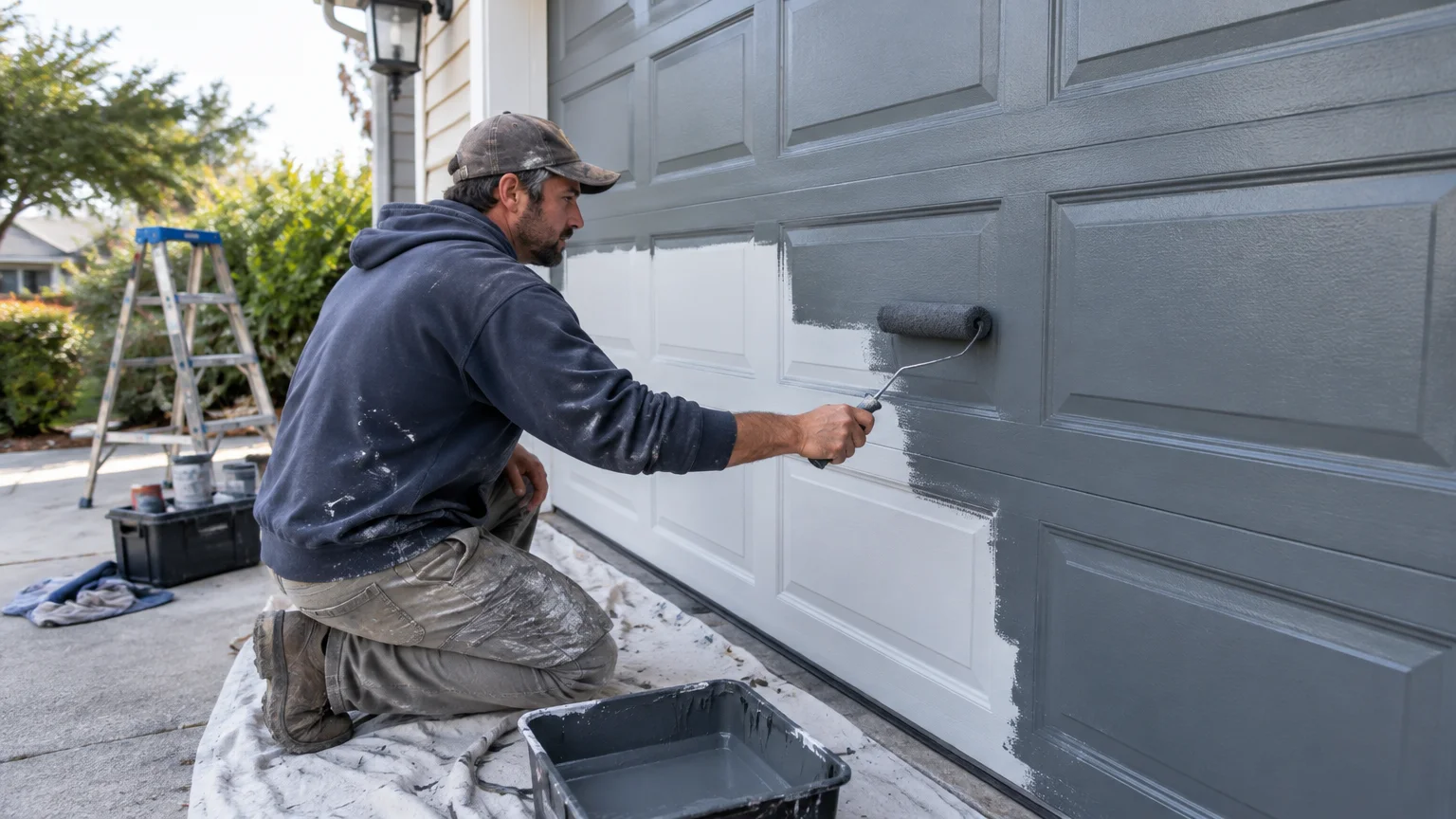
To learn how to paint garage doors, first check the door’s material and current finish. Clean and dry the surface, then use primer and paint made for it. Paint only a door that is in good shape and moves safely. Keep paint away from parts that move or help the door seal.
Can you paint any type of garage door?
Most garage doors can be painted when the surface is in good shape and the paint suits the material. First, find out what the door is made of and what finish it has now. The finish may be paint, a factory coating, or a clear coat. A label or care guide from the maker can help you check.
How do you identify the door’s material and existing finish?
Steel doors often have a smooth coating. Wood doors may show grain, joints, or older paint. Other doors may be made from aluminum, vinyl, or composite material. These can need special paint, and some may not hold a new coat well. Do not guess when the surface looks unusual or has a shiny factory finish. Check the maker’s care advice before sanding or painting.
Try a small, hidden spot first. Follow the paint label and let the test coat dry fully. If it wrinkles, peels, or does not stick, stop. Ask a paint supplier what to do before covering the rest of the door.
When should you repair or replace the door instead?
Paint can change a door’s color, but it cannot fix damage. A deep dent, heavy rust, soft or split wood, or rough movement needs attention first. A damaged panel may be repaired or replaced, but the new panel must fit and work safely. A repair expert can check the door and explain whether panel work, Garage Door Maintenance, or a full replacement may be right.
Do not paint a door that is off its track, has a loose cable, or has a broken spring. Springs and lift cables can hold strong tension. This means they can move with great force and cause serious harm. They are not safe parts for a homeowner to work on while preparing to paint. Cookeville Garage Door Repair can help property owners check a door with damage or movement problems.
How should you prepare a garage door for painting?
Good preparation helps paint stick and last. The door needs to be clean, dry, and in good repair before painting starts. The right steps depend on the door material and the paint maker’s directions. Read those directions before choosing a cleaner, primer, or paint.
What cleaning, sanding, and masking does the surface need?
Wash off dirt, dust, and grease with a cleaner that is safe for the door. Rinse away any cleaner that remains, then let the surface dry fully. Scrape loose paint with care. Sand rough edges only when needed. Do not sand through a factory coating or into material that could be damaged.
Wear safety glasses and a dust mask when scraping or sanding. Old paint may contain lead, a harmful metal. If you think it may, do not sand or scrape it until a trained expert has checked it. Use tape to cover windows, handles, trim, and nearby walls. Cover the driveway and plants to catch paint drips and dust.
How do you protect moving parts and prepare the work area?
Keep paint off hinges, rollers, tracks, springs, cables, locks, and the garage door seal. These parts move or help the door close tightly. Paint may make parts stick, wear unevenly, or fail to work as they should. Never loosen a spring, cable, or bottom bracket to make painting easier. These parts can cause serious injury if handled the wrong way.
Make sure the work area has fresh air and room to open and close the door safely. Keep children and pets away while paint is wet. If you need to raise the door to reach a spot, follow the maker’s safety advice. Never work below a door that is not held safely in place. A door that feels heavy, slips, or moves unevenly needs repair before painting.
How do you paint a garage door for an even finish?
An even finish starts with products made for the door’s material. Apply thin, steady coats and follow the paint and primer labels. The labels explain how to prepare the surface, how long paint needs to dry, and which weather is safe. Do not paint in rain, strong wind, or weather outside the product’s stated range.
Which primer and paint are suitable for the door material?
Choose primer and paint that are marked as safe for the door material and its current finish. Bare metal, wood, and old paint may need different products. Some factory coatings need a special bonding primer. If the labels are not clear, ask the paint maker or a local paint supplier before painting the whole door.
Primer helps paint grip the surface. It may also cover bare spots or marks. Let it dry as the label directs. Use exterior paint made for the door material and outdoor weather. Paint that is not suited to the surface may peel, crack, or fade sooner. The product label is a better guide than one rule for every door.
How should you apply paint to panels, edges, and trim?
For a neat result, follow the product directions and work across the door in order. A brush can reach corners and the edges of each panel. A small roller can cover wide, flat areas. Use thin coats instead of one thick coat, and keep paint out of the tracks and moving parts.
- Check that the door is clean, dry, and safe to work on.
- Apply the right primer and let it dry as the label directs.
- Paint panel edges and recessed areas, then cover the flat parts.
- Look for drips and missed spots while the paint is still wet.
- Let each coat dry before adding another coat or using the door.
Follow the label for the number of coats and drying time. Do not force the door to move while paint is wet or sticky. If it is hard to lift, makes new noise, or moves unevenly, stop using it and arrange a repair. Paint cannot fix poor door balance or a worn opener.
When should you avoid painting a garage door?
Wait to paint if the door is damaged, wet, dirty, or unsafe to use. Wait as well if you cannot identify the surface or old finish, or if the paint label says the product is not suitable. Rushing the job can lead to peeling paint and make later repairs harder.
How can peeling paint, rust, or damage affect the result?
New paint will not stick well to loose old paint. Rust can keep spreading below a new coat. Soft wood and damaged panels may also need repair before they can hold paint. A fresh coat might hide cracks or other signs of trouble. Fix what caused the damage before covering it. A repair expert can check bent panels, worn rollers, or a door that has come off its track.
Homeowners do not need a professional for safe cleaning, masking, or simple painting on a sound door. But repairs to springs, cables, bottom brackets, or an off-track door need trained help. These parts can be heavy or under tension, and the wrong tools or actions can cause harm. Cookeville Garage Door Repair serves Cookeville and nearby areas. The team can assess a door that does not open or close safely.
What maintenance helps keep a painted door looking good?
Wash the door when dirt builds up, and check it for chips, peeling paint, or rust. Small paint flaws can be touched up with a matching product once the area is clean and dry. Keep paint off the weather seal. Follow the door maker’s advice for cleaning and care.
A door that runs quietly also needs working rollers, hinges, tracks, and opener parts. You can listen for new scraping or squeaking and look for clear signs of wear. Do not take parts apart to check them. Use a lubricant only if the maker recommends it for those parts, and follow the product directions.
If the noise continues or the door jerks, stops, or hangs unevenly, arrange an inspection. Do not try to adjust springs or cables. These parts can be dangerous even when the door is not moving.
Frequently Asked Questions
Can a homeowner paint a garage door without removing it?
Often, yes. Many doors can be painted while they remain in place if they are steady and safe to use. Cover nearby surfaces and keep paint away from tracks, rollers, springs, cables, and seals. If the door is damaged or moves unevenly, have it checked before painting.
What kind of paint works on a metal garage door?
The right paint depends on the kind of metal, the current coating, and the product maker’s directions. Choose primer and exterior paint that both say they suit the surface. A small test in a hidden spot can help check if the paint sticks. If the old finish is unknown or the test coat fails, ask a paint supplier before going on.
Should garage door panels be repaired before painting?
Yes. Have damaged panels checked before adding paint. Paint cannot straighten a bent panel, stop rust from spreading, or fix a door that has left its track. A repair expert can say whether the panel can be fixed or needs to be replaced. They can also check that the door still works safely.
Can painting make a noisy garage door quieter?
No. Paint changes how the door looks, but it does not fix noisy rollers, hinges, tracks, or an opener. You can check for dirt or clear damage and follow the maker’s care advice. Ongoing noise, jerky movement, or uneven travel needs an inspection by a repair expert.
Key takeaways
- Match primer and paint to the door’s material and current finish.
- Clean and dry the surface, then follow the product label.
- Keep paint away from springs, cables, tracks, rollers, and seals.
- Repair rust, loose paint, and door damage before painting.
- Leave tensioned parts and unsafe door repairs to trained experts.
Conclusion
Painting can refresh a garage door when the surface is sound and the products fit. Careful preparation matters more than rushing through the job. Homeowners can handle basic cleaning and painting on a safe door, but should not adjust springs, cables, or other parts under tension. For Cookeville property owners, checking the door first can help prevent more trouble. If your door is damaged, noisy, or unsafe, Contact us now to arrange help before painting. Cookeville Garage Door Repair can help you decide what the door needs.
If you are not sure what you are dealing with, it is worth having someone look at it before it turns into a bigger job. Get in touch with Cookeville Garage Door Repair today and we will tell you where you stand.