You can often replace garage door panel sections without replacing the whole door. The best choice depends on the damage, the door’s age, and the condition of its tracks and lifting parts. A trained technician can tell you if one panel is safe or if a full door is better.
Table of Contents
- Can you replace just one garage door panel?
- What types of garage door damage can be repaired?
- How does matching a replacement panel affect the job?
- What factors drive the cost of replacing one garage door panel?
- When is replacing the entire garage door a better choice?
- Can a damaged garage door panel cause other problems?
- How can you decide whether to replace one panel or the whole door?
- Frequently Asked Questions
Can you replace just one garage door panel?
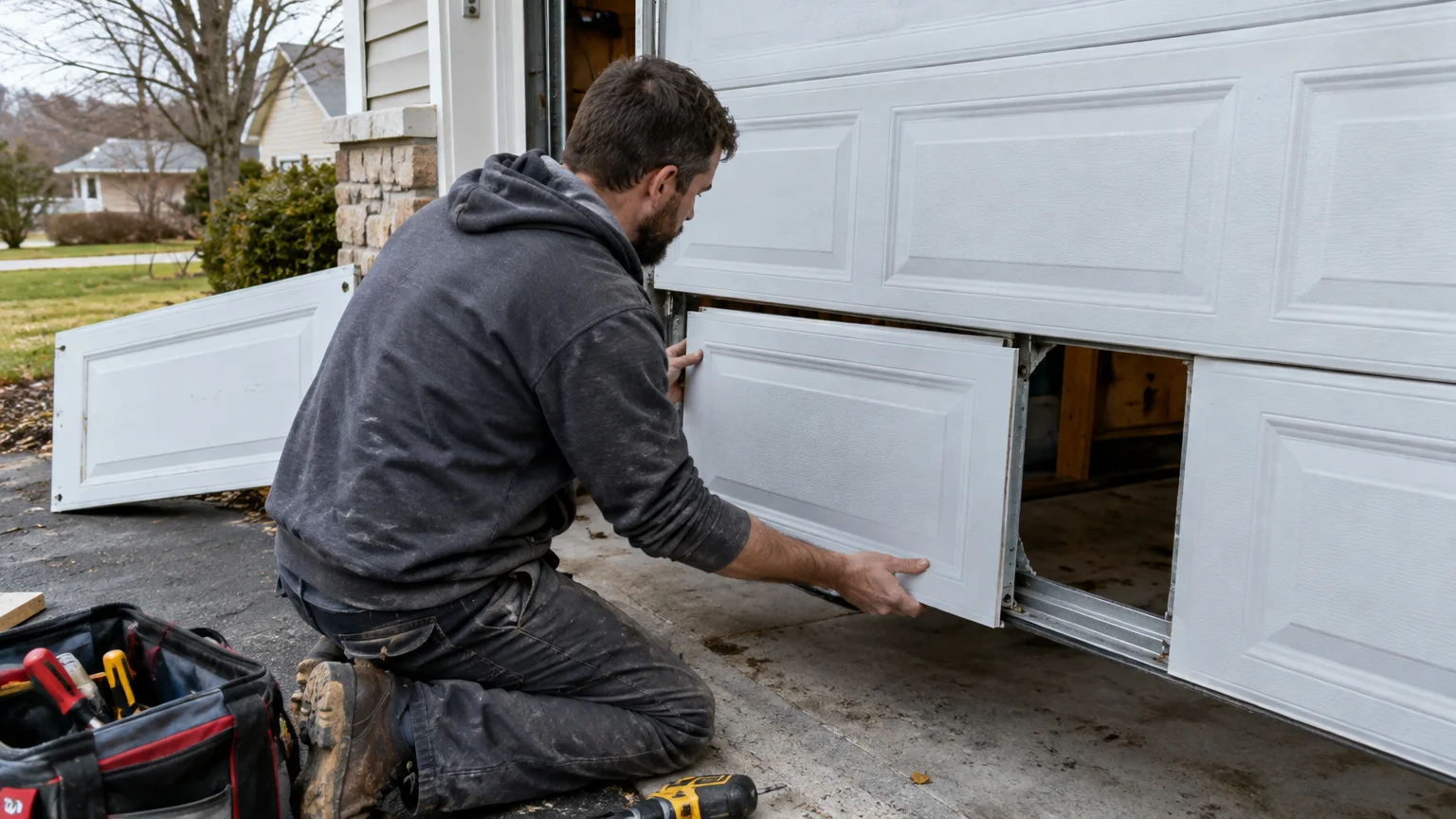
Yes, a single panel can often be replaced when the rest of the door is in good shape. This may work well after a car hit, storm damage, or a deep dent. The new panel must match the door’s brand, design, size, and build. A poor match can affect the door’s balance, movement, and look.
When panel-only replacement is usually practical
Panel-only work is often practical when the damage stays within one section. The tracks should still be straight. The hinges, rollers, cables, and springs should also work as they should. The door should open and close without twisting or pulling to one side.
A technician may check the whole door before making a choice. This is important because a damaged panel can hide harm to the frame or lifting system. Cookeville Garage Door Repair helps homeowners choose between one panel, related repairs, and a full door based on safety and future use.
When damage affects more than the visible section
A hard hit may bend a track, loosen hinges, or put stress on cables. The panel you can see may not be the only damaged part. A door that looks easy to fix may still be unsafe if its weight is not held in the right way.
Do not force a damaged door by hand or with the opener. If it is crooked, stuck, or hanging on one side, keep it closed until someone checks it. Garage Door Off Track Repair may be needed before you decide whether to replace garage door panel sections.
What types of garage door damage can be repaired?
Small dents, light bends, and some damaged hardware may be repaired. Large cracks, deep folds, and broken panel frames often need panel replacement. The safe choice depends on whether the panel can keep its shape while the door moves.
Dents, cracks, bends, and damaged hardware
A small dent may not affect how the door works. In some cases, a technician can repair the panel instead of replacing it. A sharp bend can change the panel’s shape and make the rollers rub against the tracks.
Cracks and splits are more serious when they reach a hinge or panel edge. These areas help connect the sections and spread the door’s weight. Damaged hinges, rollers, and brackets may also need repair before the door can move safely.
Homeowners can clear dirt from visible tracks and look for loose hardware. They should not remove spring parts, cables, or bottom brackets. These parts can hold strong force and may cause serious harm without the right tools and training.
When a panel replacement is safer than a repair
Replacement is often better when a panel no longer keeps its shape. A weak section can bend each time the door moves. That repeated movement may put extra stress on hinges, rollers, and the opener.
A new matching section may help the door move evenly again. Repair may not be possible when an older panel is badly bent or no longer made. Garage Door Spring Repair or Garage Door Cable Repair may also be needed if the impact damaged the lifting system.
How does matching a replacement panel affect the job?
A replacement panel must match more than the opening width. Its height, thickness, shape, hinges, windows, insulation, and finish all matter. The wrong section may leave gaps, add the wrong weight, or stop the door from sealing well.
Door brand, model, size, and panel design
The brand and model can help identify the right replacement part. Older doors may have a label or model detail on an inside surface. If that information is gone, a technician may compare the panel shape and hardware instead.
The height and width must fit the other sections. Connection points must line up with the hinges and rollers. Even a small mismatch can cause rubbing, noise, or uneven movement. The panel should be confirmed before it is ordered.
A local check can also show if the door was changed before. Cookeville Garage Door Repair serves the Cookeville area, including West Side, College Heights, Algood, Baxter, Monterey, Sparta, and nearby communities. The team can review the whole door instead of judging only the visible damage.
Color, windows, insulation, and finish considerations
A new section may not look exactly like the older panels. Sun exposure can fade the existing finish. Paint color, surface texture, and window style may also change between production runs.
Insulated doors need a panel with similar construction. A lighter or heavier section can change the door’s balance. Window inserts should match the layout and frame style if you want a consistent look.
When an exact match is not available, you can compare a close replacement with a complete new door. The right choice depends on the door’s age, appearance, safety, and likely future repairs.
What factors drive the cost of replacing one garage door panel?
The final cost depends on the panel, its match, labor, access, and related damage. One panel is often a smaller repair than replacing a full door. However, a hard-to-find panel or hidden damage can make the job more involved. The final cost is confirmed on a quote after inspection.
Materials, compatibility, and availability
The panel material affects the work. Steel, aluminum, wood, and composite panels have different weights and finishes. Insulation and windows add more details that must match the current door.
Availability matters too. A common modern panel may be easier to find than a section from an older or discontinued door. A custom match may need more planning than a standard replacement. Ask whether the proposed panel matches the door’s weight and design.
A panel that looks close but does not balance well may lead to more repairs later. The safest recommendation considers the finish and the way the whole door operates.
Labor, access, removal, and disposal requirements
The work may involve securing the door, removing connected sections, fitting the new panel, and checking the lifting system. A tight garage, poor access, or damage near the tracks can make the job harder.
Removal and disposal may also matter when the section is heavy or unstable. The technician may check rollers, hinges, cables, springs, and the opener after the panel is fitted. Garage Door Opener Repair may be needed if the impact also harmed the automatic opening system.
Urgent service may be needed when the door blocks a vehicle or leaves the garage open. The quote should explain the recommended work and the reasons behind it.
When is replacing the entire garage door a better choice?
A full replacement may make more sense when the door is old, has repeated damage, or needs several major parts. It may also be better when a matching panel cannot be found. The goal is to provide a safe, reliable door for the years ahead.
Age, repeated damage, and outdated components
One damaged panel may be easy to see, but an older door can wear in many places. Hinges may be loose, rollers may be noisy, and seals may be brittle. Replacing one section will not fix those wider problems.
Repeated repairs can also show that the door is near the end of its useful life. A full replacement may avoid the need to match old parts. It can also bring the hardware into one complete system. Garage Door Installation may be the better path when the door has widespread wear.
A technician should explain why a full replacement is being considered. Ask which parts are damaged, which are worn, and whether one panel would still operate safely.
Energy efficiency, security, and appearance
A newer door may provide better insulation and a tighter garage door seal. This can help limit drafts through the garage and improve comfort in nearby rooms. A sound door can also support home security by closing firmly.
Appearance matters as well. One new panel may stand out beside faded sections. A full replacement creates a consistent finish, window layout, and surface design. This may matter if you plan to sell or improve the front view of your property.
The best garage door choice depends on the home, safety needs, and condition of the current door. A full replacement is not always needed, but it deserves thought when several problems appear together.
Can a damaged garage door panel cause other problems?
Yes, a damaged panel can affect how the whole door moves. A bent section may pull on hinges, strain rollers, or make the door sit unevenly. Continued use can turn a small repair into a wider safety problem.
Effects on tracks, rollers, hinges, and springs
Garage door sections move together as one system. If one panel bends, rollers may rub or leave the track. Hinges can twist, and the door may put uneven force on the cables and springs.
The opener can also struggle when the door becomes heavy or hard to lift. A motor working against extra resistance may wear faster. Loud operation or slow movement should not be ignored after an impact.
Cleaning visible dirt from tracks is usually safe. Testing balance, removing spring parts, or adjusting cables is not a safe do-it-yourself task. Torsion springs, extension springs, lift cables, and bottom brackets can release stored force without warning.
Warning signs that the door should remain closed
Keep a damaged door closed when it is crooked, partly off the tracks, or unable to rest evenly. Other warning signs include a loose cable, a hanging panel, broken glass, or a loud snap during movement.
Do not use the opener to force the door through resistance. Keep people and vehicles away from the area and arrange professional help. Emergency Garage Door Repair may be needed when the door cannot secure the garage or blocks safe access.
How can you decide whether to replace one panel or the whole door?
The choice should come from a full safety check, not the panel’s look alone. The technician should check the door structure, lifting parts, opener, tracks, seals, and available replacement parts. The recommendation should cover both the current repair and likely future concerns.
Questions to ask during an inspection
Ask whether the panel is still made and whether the replacement will match the existing sections. You can also ask if the impact damaged tracks, hinges, rollers, cables, springs, or the opener.
Useful questions include:
- Is the door safe to operate right now?
- Can one panel match the size, weight, windows, and finish?
- Are other parts worn or bent beyond normal use?
- Would the repaired door still seal and balance correctly?
- Would a full replacement solve several problems at once?
These questions help you understand the recommendation. They also reduce the risk of relying on a quick visual guess.
What to expect from a repair or replacement recommendation
A clear recommendation should name the damaged parts. It should explain why repair, panel replacement, or a new door is suitable. It should also explain any safety limits, such as keeping the door closed until work is done.
Cookeville Garage Door Repair can assess garage door problems for property owners and nearby areas. The right choice may be one panel, related hardware, or a complete door. Contact us today for an urgent inspection and a clear quote before work begins.
Key Takeaways
- One garage door panel can often be replaced when the rest of the door is sound.
- The new section must match the door’s brand, size, design, weight, and features.
- Hidden damage to tracks, hinges, cables, springs, or the opener can change the choice.
- A full replacement may suit an older door with repeated damage or outdated parts.
- Spring and cable work should be left to trained professionals with the right tools.
Frequently Asked Questions
Can a homeowner replace a garage door panel?
A homeowner can inspect the door, clear loose dirt from visible tracks, and report changes in operation. Panel replacement is usually best left to a trained technician. The work may involve heavy sections and parts under force. Springs, cables, and bottom brackets should not be handled as a do-it-yourself repair.
How do you repair a damaged garage door panel?
The repair starts with a check of the panel and the full door system. A small dent may be repairable, while a bent or cracked section may need replacement. The technician should also check hinges, rollers, tracks, cables, springs, and the opener before returning the door to use.
How do you change garage door panels?
Changing a panel involves supporting the door, separating connected sections, fitting the replacement, and checking the lifting system. These tasks can expose a person to heavy moving parts and stored spring force. A homeowner should not try this work without proper training and equipment.
Is it better to replace one panel or the whole garage door?
One panel may be better when the door is in good shape and an exact match is available. A full door may be better when the door is old, has repeated damage, or needs several major parts. The decision should follow a full inspection and a quote that explains the recommended work.
What should happen if a panel is off track?
The door should remain closed, and people should stay clear of the damaged area. Using the opener can worsen the damage or pull on the cables and springs. Garage Door Off Track Repair may be needed before a panel can be replaced. A technician can check whether the tracks and lifting parts remain safe. This check is especially important in Cookeville.
If you are unsure what happened, have the door checked before the problem grows. Contact us to reach Cookeville Garage Door Repair today.